How to Play Mahjong with Two Players: Three Different Ways
You can play Mahjong with two people, even though the game is traditionally played with four. Whether you're learning how to play Mahjong with a friend, practicing with your partner, or simply can't get a full group together, you can adapt Mahjong for two players.
The rules you follow depend on which type of Mahjong you want to play. American Mah Jongg can be played with two people using a few adjustments to the usual setup and gameplay. There’s also Siamese Mahjong, a variation specifically designed for two players, as well as two-player adaptations of Chinese Mahjong.
If you want to play a typical game with four players, you can play Mahjong online with a group or with bots. But if you’re looking to play Mahjong with two people at a table, this post will explain how two-player Mahjong works, what changes from the traditional game, and which version might be right for you.
3 Ways to Play Mahjong with Two Players
You have more than one option if you’re playing Mahjong with two people. We share two options using the current National Mah Jongg League (NMJL) card and one option for adapting Chinese Mahjong.
How to Play American Mah Jongg with Two Players
The goal for a two-player game is the same as in four-player American Mah Jongg: Complete one of the winning hands shown on the current NMJL card. You still follow the rules for suits, pairs, pungs, kongs, Jokers, and exposures. The obvious change is that you're playing against one opponent instead of three, but the biggest differences are in how you set up the Mahjong game and the Charleston. Because the Charleston depends on passing tiles among four players, you'll skip it entirely.
You don't need a special Mahjong tile set to play American Mah Jongg with two people. You can use the same 152 tiles, racks, and current NMJL card you would use for a four-player game. Each player plays one hand, just as they would in a regular game, with only two players drawing and discarding tiles.
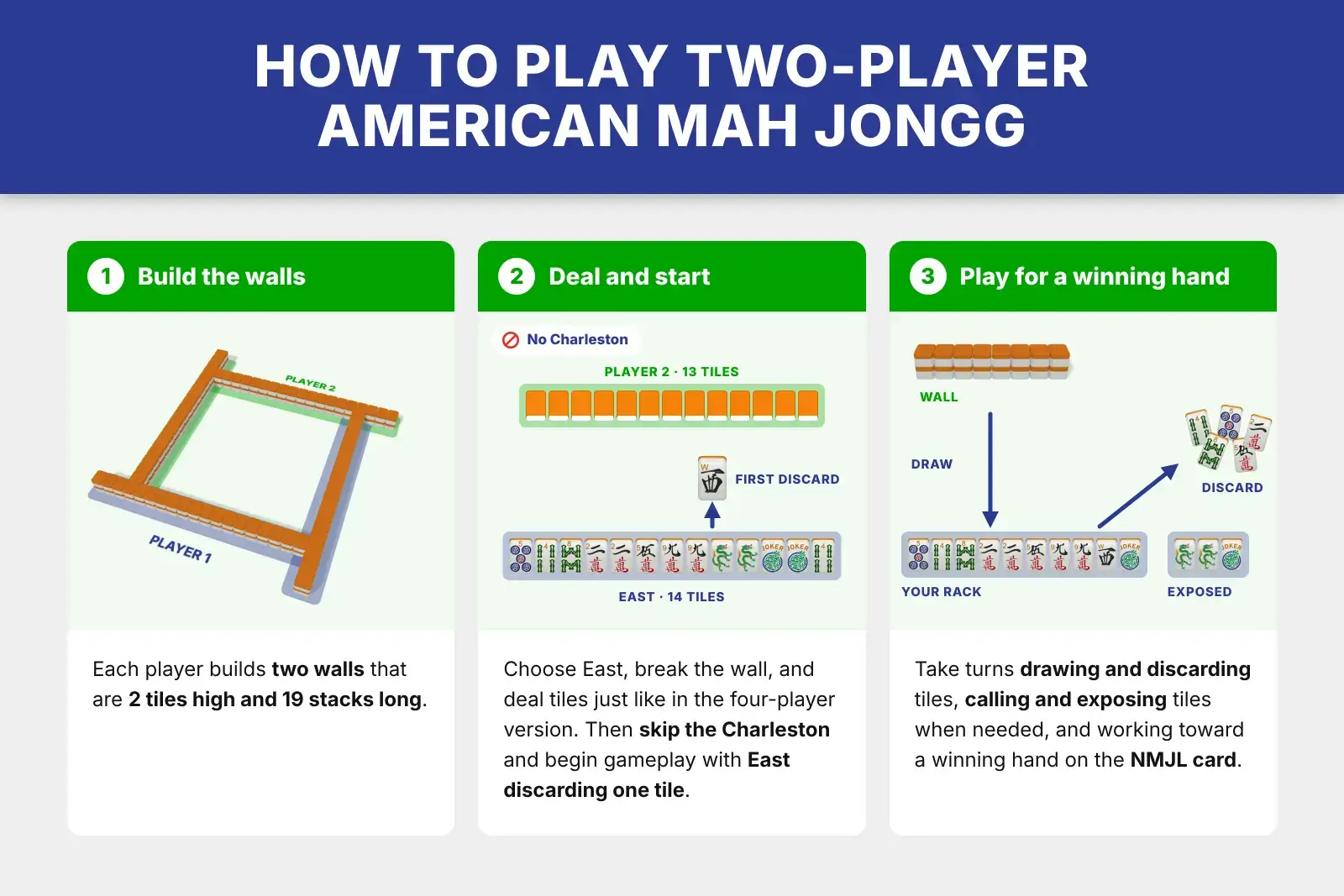
Set up the game and play by following these steps:
- Shuffle and build the walls. Turn all 152 tiles facedown and mix them. Each player builds two walls, one in front of them and one to their right. Each wall is 19 stacks long and 2 tiles high, giving you four walls arranged in a square.
- Choose the dealer. Roll the dice to determine who will be East. East then rolls again to break the wall. Just like a regular four-player game, East will count inward from the right of their wall according to the number on the dice and separate the wall at that point.
- Deal the tiles. Starting with East, each player takes four tiles at a time from the wall, repeating until both players have 12 tiles. East then takes two additional tiles, and the other player takes one. East starts with 14 tiles and the other player with 13.
- Skip the Charleston. There are no tile passes before play begins, so you can move directly from the deal to regular game play.
- Begin gameplay. East discards first. Players then take turns drawing from the wall or calling an eligible discard, working toward a winning combination on the NMJL card. A turn consists of any of these options:
- Drawing and discarding: You draw a tile and then discard a tile, keeping your rack to 13 tiles.
- Calling and discarding: If your opponent discards a tile that you need to complete a pung, kong, or quint, you can call the tile, which means you pick that up instead of drawing from the wall. Then you must reveal the set you completed (called an exposure) and discard one tile. You can call the tile for a single or pair if it’s the last tile you need for Mah Jongg.
- Performing a Joker swap: Start your turn by calling or drawing a tile. If your opponent exposed a set with a Joker and you have or drew the natural tile, you can do a Joker swap. Say that you’d like to swap the Joker, exchange your tile for the Joker, and then discard one tile.
- Declare Mah Jongg. The first player to complete a valid 14-tile hand declares Mah Jongg and wins.
How to Play Siamese Mahjong: Two Players, Two Hands Each
Siamese Mahjong is a two-player American Mah Jongg variation created by Gladys Grad. Instead of playing one hand apiece, each player manages two hands simultaneously, using two racks or a specially designed double rack.
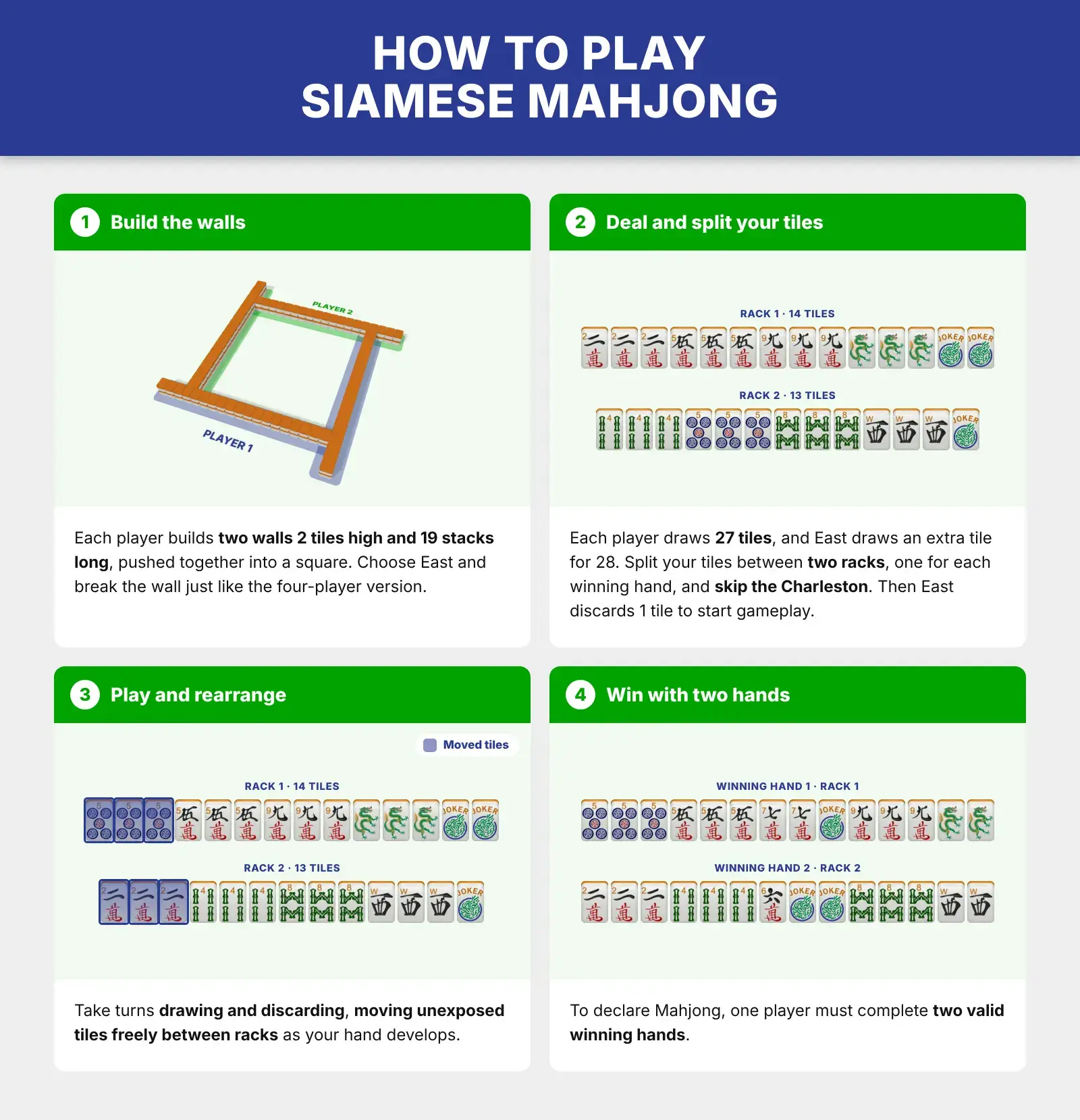
The game still uses American Mah Jongg tiles and winning combinations, and you build the walls like in the two-player American Mah Jongg described above. But these elements are different:
- Two racks per player: Each player works toward completing two separate winning hands.
- 27 tiles each: Both players begin by taking turns drawing tiles until they each have 27 tiles, which can be distributed however the players want between their racks. East draws the 28th tile to begin play.
- No Charleston: Players move directly from arranging their tiles to regular play.
- Flexible tile arrangement: Players can move unexposed tiles between their two racks as they develop their hands.
- Different winning conditions: The game continues until a player declares two Mah Jonggs or the wall is exhausted, with special scoring rules for completed hands.
This two-player Mahjong adds a layer of strategy because you're managing two potential winning hands at once. You have more tiles to work with, but you also have to decide how to divide them, when to pursue different combinations, and which hand to prioritize.
For players who already know American Mah Jongg and want a more involved two-player experience, Siamese Mahjong offers a way to play without finding two additional opponents.
How to Play Chinese Mahjong with Two Players
You can play Chinese Mahjong with two players, but unlike American Mah Jongg's two-player rules, there isn't one universal set of rules for two-player Chinese Mahjong. Different versions of Chinese Mahjong have their own rules, and players may agree on house rules to make the game work with two people.
One approach is to keep the usual tile set and basic game play, with both players drawing and discarding as they work toward a winning hand. Other adaptations change the number of tiles in play or restrict certain combinations to make the game move faster.
For example, some two-player adaptations:
- Remove one numbered suit. Playing with two suits instead of three reduces the number of different tiles and changes the combinations available.
- Restrict chows. Some house rules prohibit chows (three consecutive numbered tiles of the same suit), so players must rely on other combinations, such as pungs and kongs.
- Adjust scoring. Players may simplify the scoring system or agree on different requirements for a winning hand.
These are house rules rather than a single standardized two-player version of Chinese Mahjong. The important thing is to agree on the rules before you begin, especially which tiles and combinations are allowed and how you'll determine the winner.
If you're familiar with Chinese Mahjong, adapting the rules can be an enjoyable way to practice with another player. If you're just learning, however, it's generally easier to start with one established variation rather than introduce several rule changes at once.
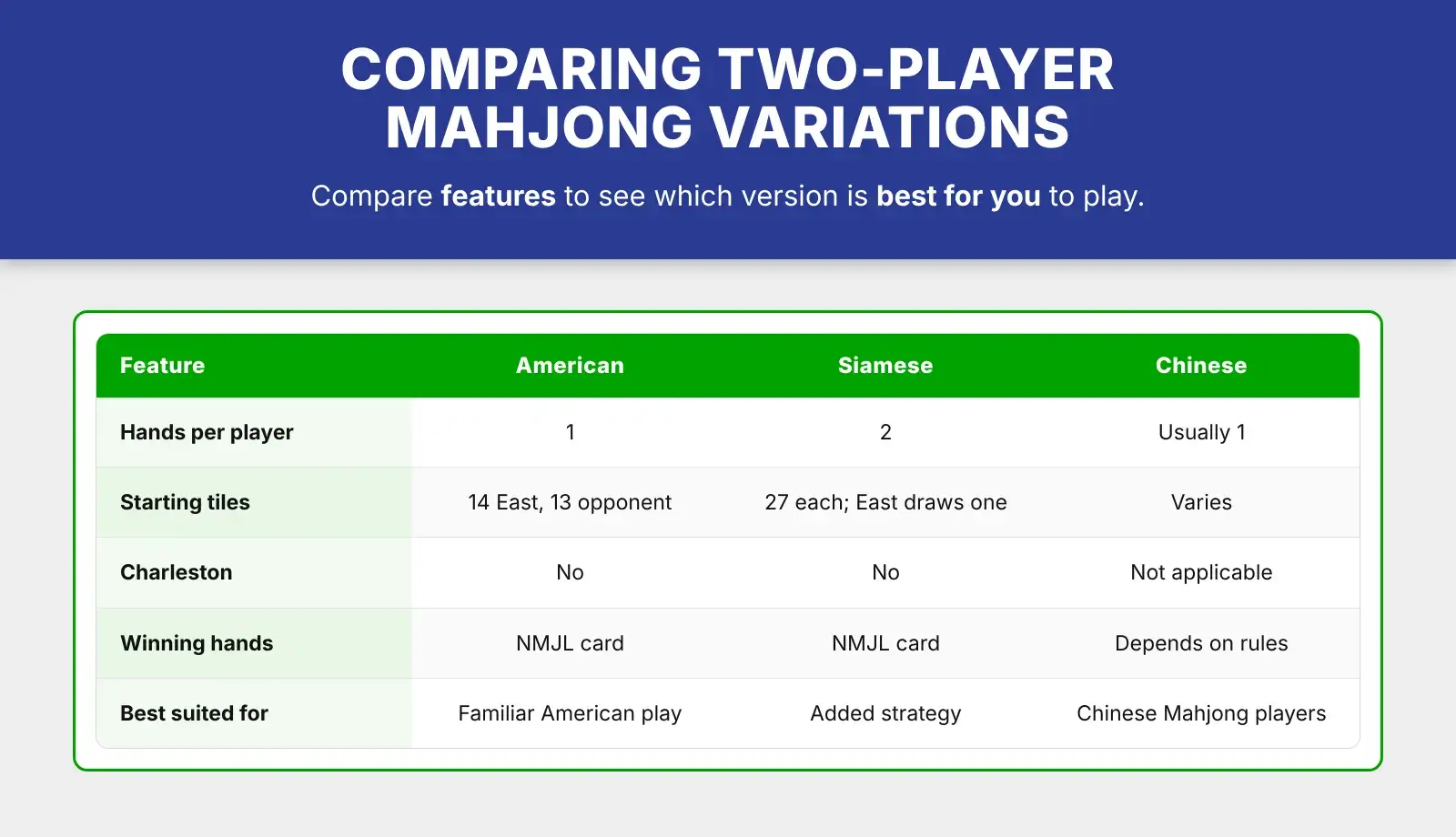
How to Adjust Your Strategy for Two-Player Mahjong
The goal of two-player American Mah Jongg is the same as in a four-player game: Complete a winning hand on the NMJL card before your opponent does. But with no Charleston, fewer discards, and only one opponent to watch, you'll need to approach some decisions differently. Whether you already use Mahjong strategies or not, these tips will help you win at two-player Mahjong.
- Keep your hand options open for longer. Without the Charleston, you lose the opportunity to exchange unwanted tiles before regular play begins. That means you may have to work with a less promising starting hand and rely on draws to improve it. Rather than committing to one hand on the Mah Jongg card immediately, look for several possibilities that share the tiles you already have. Pay attention to combinations that could work with more than one hand, and be willing to change direction as new tiles become available. This flexibility is especially useful when you're waiting for a particular tile that may never appear.
- Be more selective about calling discards. With only one opponent, you'll have fewer opportunities to claim discarded tiles. That can make an available tile tempting, especially if you've been waiting for it. However, exposing a pung, kong, or quint also gives your opponent information about the hand you're building. Before calling a discard, consider whether the exposure meaningfully advances your hand and whether revealing part of your strategy is worth it.
- Pay closer attention to your opponent's tiles. With three opponents, you have more discards and exposures to monitor. In two-player Mahjong, you can focus entirely on one person's actions. Watch which tiles your opponent discards and which combinations they expose. As the game progresses, those clues may help you narrow down the hands they're pursuing on the NMJL card. Don't assume that one discard tells you exactly what your opponent needs, though. Just as you may change your intended hand, your opponent may be considering several possibilities.
- Think carefully about defensive discards. Because you're playing against only one opponent, every discard goes directly into the pool of tiles that person may be able to claim. As your opponent makes exposures or appears close to completing a hand, consider whether a tile you're about to discard could help them. Compare their visible combinations with possible hands on the card, and look for safer alternatives when you can. You won't always know which tiles are safe, especially early in the game. But paying attention to the tiles already discarded and the combinations your opponent has exposed can help you make more informed decisions.
- Adjust your expectations about pacing. With only one opponent discarding tiles, you have fewer opportunities to claim something useful, even though your turns come around more frequently. That means you may need to rely more heavily on drawing from the wall to complete your hand. Keep an eye on how many tiles remain, particularly if you're pursuing a hand that needs several specific tiles. As the wall gets smaller, consider whether your current hand is still realistic or whether another combination on the card offers a better chance of winning.
Tips for Playing Mahjong with Two People
Two-player Mahjong can be a good way to practice your skills or enjoy a game when you don't have a full group available. A few simple tips can make the experience more enjoyable, especially if you or your opponent are Mahjong beginners:
- Start with a familiar variation. If you normally play American Mah Jongg, use the published two-player rules before trying Siamese Mahjong or experimenting with house rules. You'll already know most of the game mechanics, so you can concentrate on the adjustments for two players.
- Keep reference materials nearby. You don't need to memorize the winning hands or every rule before playing. Keep your current NMJL card and Mah Jongg cheat sheets handy, especially if you're still learning how to recognize tiles, build combinations, or handle Jokers.
- Practice the setup together. With two players, each person builds two walls instead of one. Take your time shuffling, building the walls, breaking the wall, and dealing the tiles correctly. Once you've done it a few times, the process will become more familiar.
- Use practice games to learn the mechanics. If one player is new to Mahjong, consider playing a few instructional rounds where you talk through the steps and explain unfamiliar terms. You can focus on drawing, discarding, making exposures, and recognizing winning hands before worrying about competitive play.
- Agree on any house rules beforehand. If you're playing a Chinese Mahjong adaptation or modifying the published rules, make sure you both understand which tiles and combinations are allowed, how turns work, and how you'll determine the winner.
Use Mahjong with Two Players to Practice the Game
You don't need four people to enjoy Mahjong. Two-player Mahjong gives you a chance to become more comfortable recognizing tiles, reading the card, building winning Mah Jongg hands, and deciding what to keep or discard without having to follow three opponents at once.
And when you don't have anyone available to play in person, Mahjong4Friends makes it possible to keep playing Mahjong online. Whether you're learning the basics, practicing your strategy, or simply enjoying the game, you don’t have to wait until your next four-player gathering.